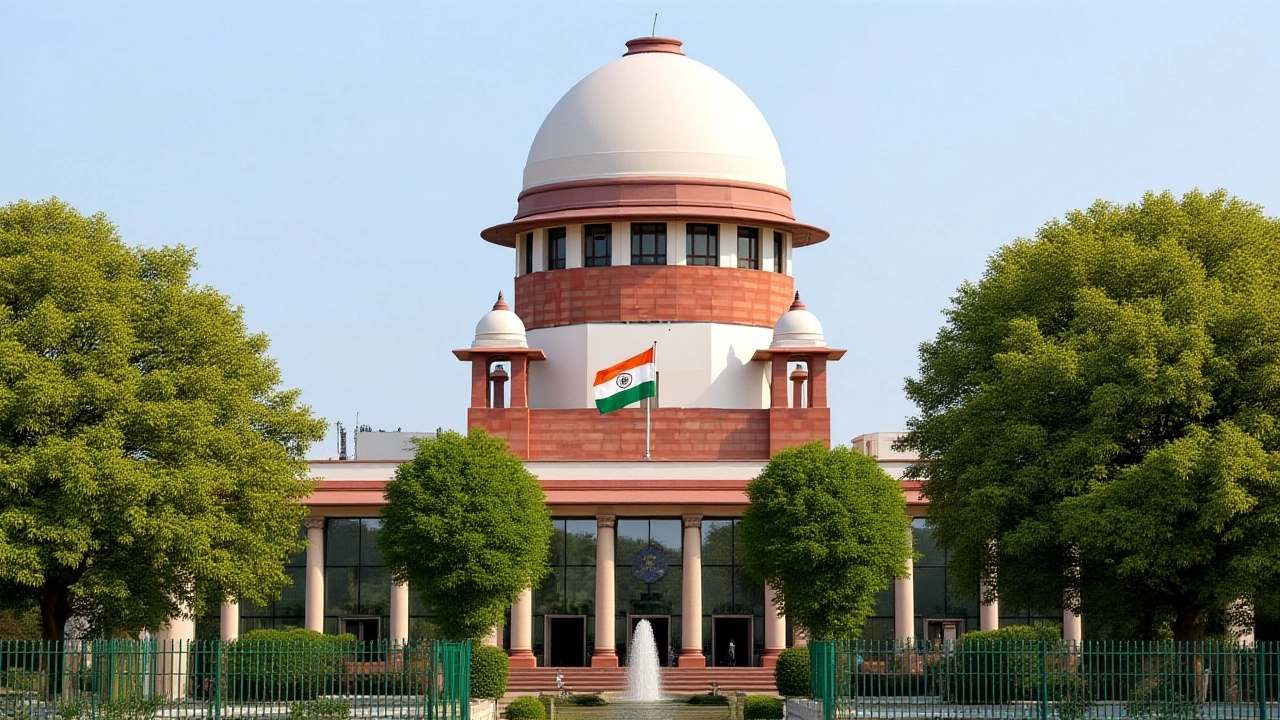
When the Supreme Court of India struck down the Government of Uttar Pradesh's order to levy Value Added Tax (VAT) on natural gas, it sent shockwaves through the energy sector. The ruling, delivered recently in New Delhi, effectively blocks the state from imposing this specific tax burden on a commodity that is already heavily regulated at the central level.
The decision matters because it clarifies the complex boundary between state and federal taxation powers in India. For years, states have looked for new revenue streams, often targeting essential commodities. But here’s the thing: natural gas isn’t just any commodity. It’s a strategic resource with pricing mechanisms controlled by the central government. Trying to layer state VAT on top of that creates a legal mess—and the court finally untangled it.
The Legal Clash Over Energy Taxes
The core issue wasn't just about money; it was about jurisdiction. The Government of Uttar Pradesh had issued notifications attempting to include natural gas under its VAT net. Their argument? They needed the revenue to fund state development projects. But the Supreme Court disagreed, pointing out that such a move violated the principle of single-point taxation intended for fuels like petroleum products.
"The state cannot impose VAT on natural gas when the central government has exclusive control over its pricing and distribution framework," the judgment essentially stated. This aligns with previous precedents where the apex court has protected consumers from double taxation on essential energy sources. The twist is that while petrol and diesel face VAT, natural gas operates under a different legal umbrella entirely.
This isn't the first time a state has tried this. Several other Indian states have flirted with similar ideas, watching Uttar Pradesh's case closely. If UP can't do it, who else can? The answer, according to this verdict, is likely no one—at least not without a major change in constitutional interpretation or central legislation.
Impact on Consumers and Industry
So, what does this mean for you? If you're an industrial user of natural gas in Uttar Pradesh, breathe easy. Your input costs won't suddenly spike due to state-level taxes. For domestic consumers using piped natural gas (PNG) or compressed natural gas (CNG), prices should remain stable, unaffected by this particular fiscal maneuver.
Industry experts note that this stability is crucial for manufacturing hubs in the region. "Uncertainty in energy costs kills investment," says one anonymous industry analyst based in Lucknow. "This ruling provides much-needed clarity." Companies like GAIL (India) Ltd., which distribute natural gas across the country, can now plan their operations without fearing arbitrary state tax hikes.
However, the financial hit to the state exchequer is real. The Government of Uttar Pradesh loses a potential revenue stream. How much? Estimates vary, but given the volume of gas consumed in India's most populous state, we're talking about hundreds of crores of rupees annually. That’s money that will now need to be found elsewhere—likely through other taxes or reduced spending.
Broader Implications for Federalism
Beyond the immediate economic impact, this case reinforces the supremacy of central laws regarding inter-state trade and commerce in essential commodities. It serves as a reminder to state governments that their power to tax is not absolute. There are limits, especially when those taxes interfere with national energy security policies.
Turns out, this decision might also influence future debates on Goods and Services Tax (GST) implementation. While fuel is currently outside GST, questions remain about whether certain aspects of energy distribution could eventually fall under its purview. This judgment suggests that any such move would require careful negotiation between center and states, rather than unilateral action.
Other states are taking note. Maharashtra, Gujarat, and Tamil Nadu—all major industrial players—are reportedly reviewing their own tax structures in light of this ruling. Will they follow suit? Or will they find loopholes? Only time will tell. But for now, the message from the Supreme Court is clear: don't touch natural gas VAT.
What's Next?
The immediate next step is compliance. The Government of Uttar Pradesh must withdraw its notifications and refund any illegally collected taxes if applicable. This process could take months, involving bureaucratic hurdles and potential litigation from those who paid the tax before the ban.
In the longer term, expect more scrutiny on state tax policies. With rising infrastructure needs and shrinking margins, states are desperate for revenue. This ruling closes one door, but others may open. Could there be attempts to tax electricity differently? Or perhaps new levies on renewable energy components? Watch this space.
For now, though, the Supreme Court has spoken. Natural gas remains free from state VAT in Uttar Pradesh—a small victory for consumers and industries alike, even if it comes at a cost to the state budget.
Frequently Asked Questions
Why did the Supreme Court ban VAT on natural gas in UP?
The court ruled that natural gas pricing and distribution are controlled by the central government. Imposing state VAT would violate principles of single-point taxation and create regulatory confusion, interfering with national energy policy frameworks established by federal authorities.
Who is affected by this decision?
Industrial users, CNG vehicle owners, and households using piped natural gas in Uttar Pradesh benefit directly from avoided tax increases. The Government of Uttar Pradesh is negatively affected financially, losing a projected revenue source estimated in the hundreds of crores of rupees annually.
Does this apply to other Indian states?
While the ruling specifically addresses Uttar Pradesh, its legal reasoning sets a strong precedent. Other states are unlikely to successfully impose similar VAT charges on natural gas without facing identical legal challenges, effectively creating a nationwide de facto ban on such state-level taxes.
Will natural gas prices go down?
Not necessarily. The ruling prevents a price *increase* caused by new taxes. Current prices are determined by global market rates and central government subsidies. However, consumers are protected from the additional 1-2% cost that the proposed VAT would have added to their bills.