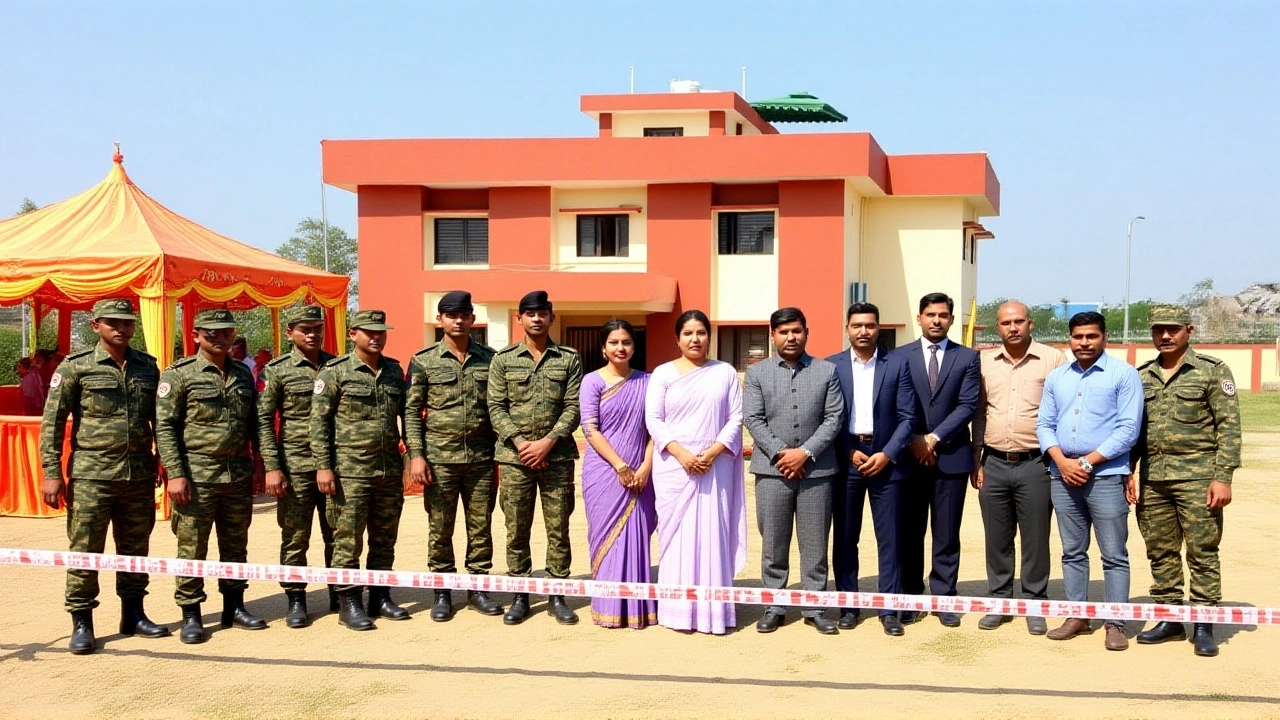
When Samir V Kamat, Chairman of the Defence Research and Development Organisation cut the ribbon on May 7, 2026, he wasn’t just opening another government building. He was unveiling India’s new frontline defense against invisible killers: radiation, chemical agents, and biological hazards.
The facility, located on the sprawling Burari plains in New Delhi, is no ordinary training ground. It’s a state-of-the-art Chemical, Biological, Radiological, and Nuclear (CBRN) Field Training and Demonstration Centre. Think of it as a fortress designed to simulate worst-case scenarios so that when real disasters strike, responders aren’t guessing—they’re ready.
Why the Golden Hour Matters
Here’s the thing about nuclear or radiological emergencies: time isn’t just money; it’s life. Experts refer to the first 60 minutes after an incident as the "golden hour." In that window, every second counts for containment, evacuation, and medical triage. If you miss it, the consequences can be catastrophic.
That’s exactly why this centre exists. Officials from DRDO have been vocal about closing what they call the "response gap." Until now, specialized training for these high-stakes scenarios was fragmented. Now, all under one roof in the capital, personnel can practice real-time field response in controlled but realistic environments. It’s not just theory anymore—it’s muscle memory.
Inside the Fortress: Tech and Tools
Walk through the gates at Burari, and you’ll find facilities that sound like they belong in a sci-fi movie. There’s a dedicated radiological and nuclear test-bed facility where teams can simulate leaks, detonations, or contamination events without risking public safety. Then there are the heavy-ion research facilities, which allow scientists to study how different materials react to extreme radiation exposure.
But it’s not all about hardware. The centre also features advanced emergency medical response units. Imagine treating patients exposed to nerve agents or radioactive fallout while wearing protective gear that limits your dexterity. That’s the kind of pressure-testing happening here daily. Real-time data feeds from sensors across the site help instructors adjust scenarios on the fly, making each drill more challenging than the last.
Who’s Behind the Operation?
You might wonder who’s pulling the strings behind this massive undertaking. The answer lies with the Institute of Nuclear Medicine and Allied Sciences (INMAS), a prestigious laboratory under the DRDO umbrella. INMAS has earned its stripes over decades, notably contributing significantly during the COVID-19 pandemic by developing diagnostic kits and protective equipment.
Samir V Kamat, who inaugurated the centre, emphasized that this isn’t just a military project. It’s a national security imperative. "This centre is not just a building," he noted, echoing sentiments shared by defence analysts. "It is the most modern weapon in our non-conventional warfare and disaster management strategy."
By placing the centre in New Delhi, the government signals a clear priority: protecting the heart of the nation. With major infrastructure hubs, diplomatic missions, and millions of citizens concentrated in the capital, the risk profile is inherently higher. Having a rapid-response training hub nearby reduces deployment times dramatically.
A Shift in National Strategy
This move reflects a broader shift in how India views asymmetric threats. Traditional warfare is evolving. Today’s dangers often come in forms that don’t leave craters but leave long-term health impacts—chemical spills, bio-terrorism, or dirty bombs. The Burari centre prepares forces for these gray-zone conflicts.
Comparisons to similar global initiatives are inevitable. Countries like the United States and Russia have long maintained specialized CBRN training grounds. However, India’s approach integrates medical response more tightly with tactical operations, recognizing that saving lives is as crucial as neutralizing threats. This holistic model could set a precedent for other nations facing similar urban security challenges.
What’s Next for Indian Defence?
The inauguration marks only the beginning. Over the next 12 months, expect to see increased collaboration between local fire departments, police units, and armed forces using the Burari facility. Joint drills will likely become annual fixtures, testing interoperability across agencies.
Long-term plans include expanding the curriculum to cover emerging biotechnological threats. As gene-editing tools become more accessible, the potential for engineered pathogens rises. The heavy-ion research wing will play a key role in understanding and countering such future risks. For now, though, the focus remains on immediate readiness.
Frequently Asked Questions
What exactly does the CBRN centre train for?
The centre focuses on four main threat categories: Chemical, Biological, Radiological, and Nuclear incidents. Training includes detecting hazardous materials, decontamination procedures, emergency medical treatment for exposure victims, and tactical containment strategies. It simulates real-world scenarios like toxic gas leaks or radioactive contamination to ensure responders act decisively under pressure.
Why was Burari chosen for this facility?
Burari plains offer a large, relatively isolated area within close proximity to New Delhi’s critical infrastructure. This location allows for safe simulation of large-scale disasters without endangering dense residential populations, while still enabling rapid deployment of trained teams to the capital if needed. Its accessibility from multiple entry points also aids in logistical support for complex exercises.
How does this relate to the 'Golden Hour' concept?
The 'Golden Hour' refers to the critical first 60 minutes following a disaster, particularly nuclear or radiological events. During this time, effective intervention can drastically reduce casualties and environmental damage. The Burari centre is specifically designed to train personnel to act efficiently within this narrow window, minimizing delays caused by confusion or lack of protocol knowledge.
Which organization manages the day-to-day operations?
The Institute of Nuclear Medicine and Allied Sciences (INMAS), a premier laboratory under the DRDO, oversees the centre’s operations. INMAS brings extensive expertise in nuclear medicine and allied sciences, having previously contributed vital resources during the COVID-19 crisis. Their involvement ensures that scientific rigor guides both training protocols and research initiatives at the facility.
Is this centre open to civilian emergency services?
While primarily serving defence personnel, the centre aims to foster collaboration with civilian agencies. Fire brigades, police units, and hospital staff may participate in joint drills to improve coordination during actual emergencies. This integrated approach ensures that all stakeholders share common protocols and communication standards, enhancing overall national resilience against CBRN threats.